“When you take a loss, don’t rush to win the money back.”
Jesse Livermore Biography
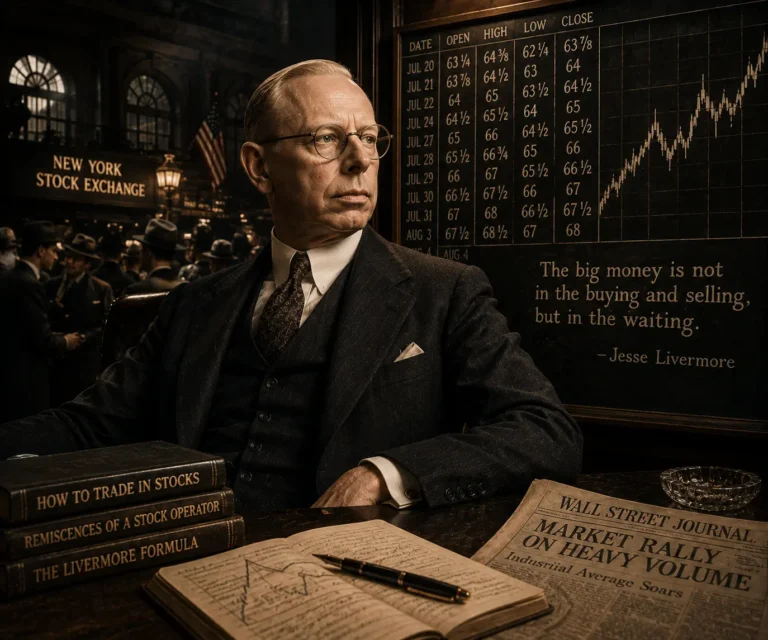
Jesse Lauriston Livermore was an American stock trader and market speculator, widely regarded as one of the most influential traders in financial-market history. He was born on July 26, 1877, in Massachusetts and began working in the financial industry as a teenager.
At the age of fourteen, Livermore moved to Boston and found employment as a quotation-board boy at a brokerage firm. His job was to record stock prices, but he soon began studying price movements and identifying recurring market patterns. He later started trading in bucket shops, where he became so successful that several establishments reportedly refused to accept his trades.
Livermore eventually moved to New York and traded on Wall Street. He became famous for taking large speculative positions during major market events. He made substantial profits by short-selling stocks during the Panic of 1907 and again during the Wall Street Crash of 1929. His success earned him the nickname “The Great Bear of Wall Street.”
However, Livermore’s career was marked by extreme rises and falls. He built several large fortunes but also lost them because of excessive leverage, changing market conditions, emotional decisions, and failures to follow his own risk-management principles. His life demonstrated both the extraordinary opportunities and the serious dangers of speculation.
Livermore’s trading philosophy focused on market trends, price action, patience, position sizing, and emotional discipline. He believed traders should wait for clear opportunities, trade in the direction of the major trend, cut losing positions quickly, and allow profitable trades enough time to develop.
His experiences inspired Edwin Lefèvre’s famous book Reminiscences of a Stock Operator, a fictionalized account of Livermore’s trading career. Livermore also presented his own ideas in How to Trade in Stocks. These books remain widely read by traders because they explore trading psychology, market behavior, money management, and the emotional challenges of speculation.
Jesse Livermore died in New York City on November 28, 1940. Despite his tragic personal ending and repeated financial losses, his lessons about patience, discipline, trend-following, and risk management continue to influence traders around the world.
“It was never my thinking that made the big money for me. It was always my sitting.”
About the Author